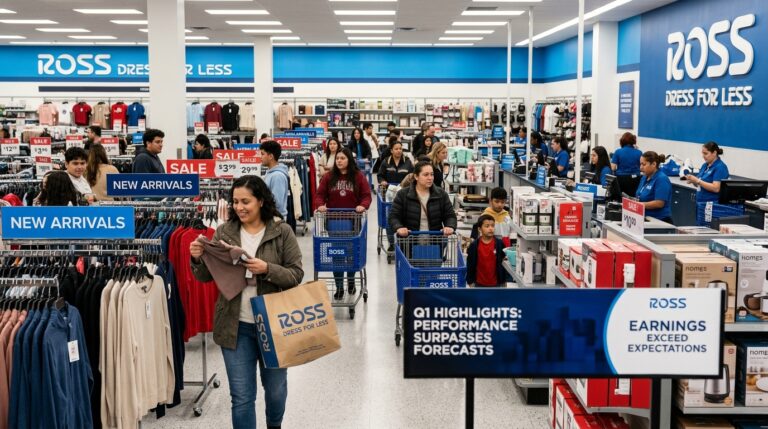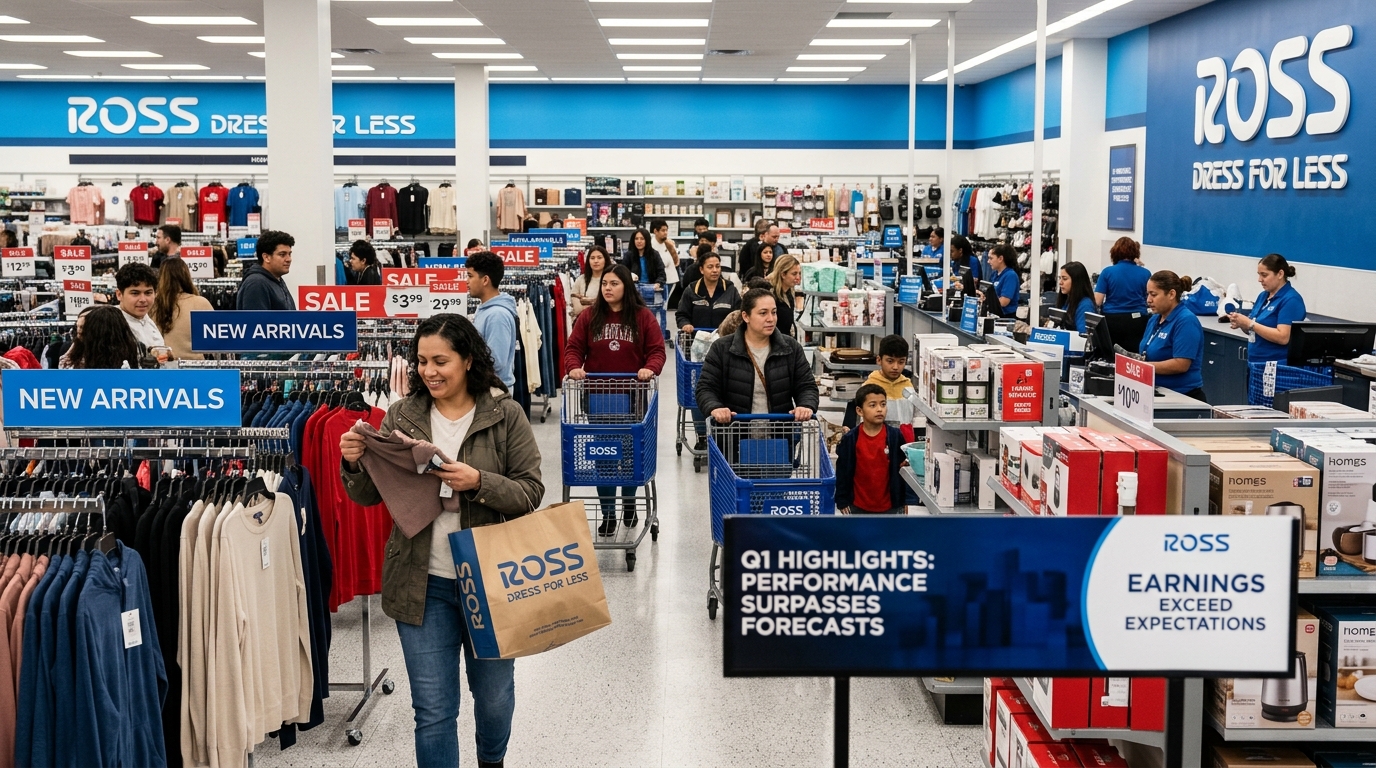
Off-price retail isn’t supposed to put up numbers like this. But Ross Stores did.
On May 21, ROST reported Q1 2026 results that weren’t just a beat — they were a blowout by almost any measure you care to look at. The stock jumped 4.9% on the print. Analysts scrambled to raise targets. And the broader narrative around consumer spending just got a lot more complicated.
Analyst Targets (Post-Earnings)
- JP Morgan — Overweight, PT raised to $251
- Citigroup — Buy, PT raised to $261
- Wells Fargo — Overweight, PT raised to $245
- UBS — Neutral, PT raised to $227
- Telsey Advisory Group — Outperform, PT $240
The Numbers
- Revenue: $6.0 billion — up 21% year-over-year
- Comparable Store Sales: +17% — vs. flat in the same quarter last year
- EPS: $2.02 diluted — beat the $1.68 consensus estimate by 20.24%; guidance had been $1.60–$1.67
- Operating Margin: 13.4% — well above the 11.8%–12.1% plan
- Free Cash Flow Margin: 10.4%, up from 4.1% in the prior year period
- Q2 2026 Guidance: Comp sales +6%–7%, EPS $1.85–$1.93
- Full Year 2026 EPS Guidance: $7.50–$7.74, up 13%–17% from $6.61
Why the Stock Is Moving
Customer traffic drove it. Not price increases, not mix shift — actual bodies walking into stores and buying more. Management cited compelling merchandise assortments, improved in-store experience, and higher customer acquisition from marketing. They also flagged an incremental tailwind from tax refund spending flowing through the quarter.
What’s interesting is the comp acceleration. The same-store sales line went from flat a year ago to +17% this quarter. That’s not a rounding error. That’s a structural shift in where consumers are choosing to shop — and at $6.14 in oil, elevated mortgage rates, and treasury yields still above 5%, the trade-down dynamic that has benefited off-price retail is nowhere near exhausted.
Macro Context
Ross doesn’t need a healthy consumer. It needs a stressed one. With Brent crude near $91 and inflation still above target in services, the value-seeking shopper is actively trading down from full-price department stores. That’s the entire thesis — and the Q1 print confirms the thesis is still intact. Merchandise margin improved 85 basis points. Occupancy leverage added another 60. Distribution and domestic freight costs declined. The operating model is firing on all cylinders.
Bull / Base / Bear
Bull: The trade-down cycle extends through 2026 and into 2027, new store expansion (110 planned for the year at 5% unit growth) layers on revenue without margin dilution, and Northeast market penetration opens a whitespace opportunity management is already building into its five-year plan.
Base: Comp sales normalize toward the 6%–7% guidance range as the Q1 tax refund tailwind fades. EPS growth stays in the 13%–17% range, the stock re-rates modestly higher, and ROST continues to outperform the S&P in a choppy tape.
Bear: Tariff-related cost pressures resurface in Q2 (management specifically referenced anniversarying tariff ticketing costs), consumer sentiment cracks on oil and rates, and the 17% comp becomes the peak print that analysts benchmark everything else against.
What Investors Should Watch
The next earnings report is scheduled for August 20, 2026. Key KPIs: comp trajectory relative to the 6%–7% guide, merchandise margin sustainability, and whether new store productivity holds at the 70%–75% of mature locations target. The $1.275 billion buyback authorization for the full year also provides a floor — management has been consistent on capital return.
Bottom Line
Ross just reminded the market what a clean fundamental story looks like. The consumer is under pressure and shopping smarter. ROST is where that shopping goes. The question from here isn’t whether the thesis works — it clearly does. It’s whether a 4.9% post-earnings pop already priced what came next, or whether this is the beginning of a real re-rating.
Sell-side analysts still see only 4.5% revenue growth over the next 12 months. If traffic holds anywhere near this pace, those estimates are too low.
For informational purposes only.
About the Author