Hey there, bargain hunter. Let’s talk about electricity.
Not the exciting kind. The boring, unglamorous, we-actually-need-this-to-run-the-world kind. Because right now, the unsexy business of generating reliable baseload power has become one of the most fiercely contested investment themes in the market.
Here is what changed everything: AI.
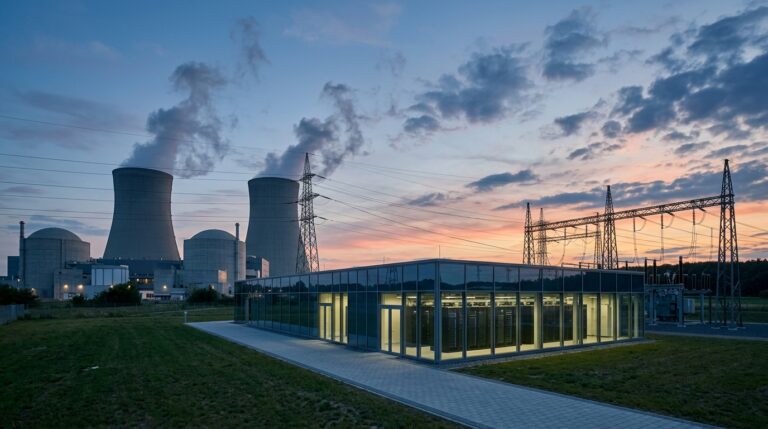
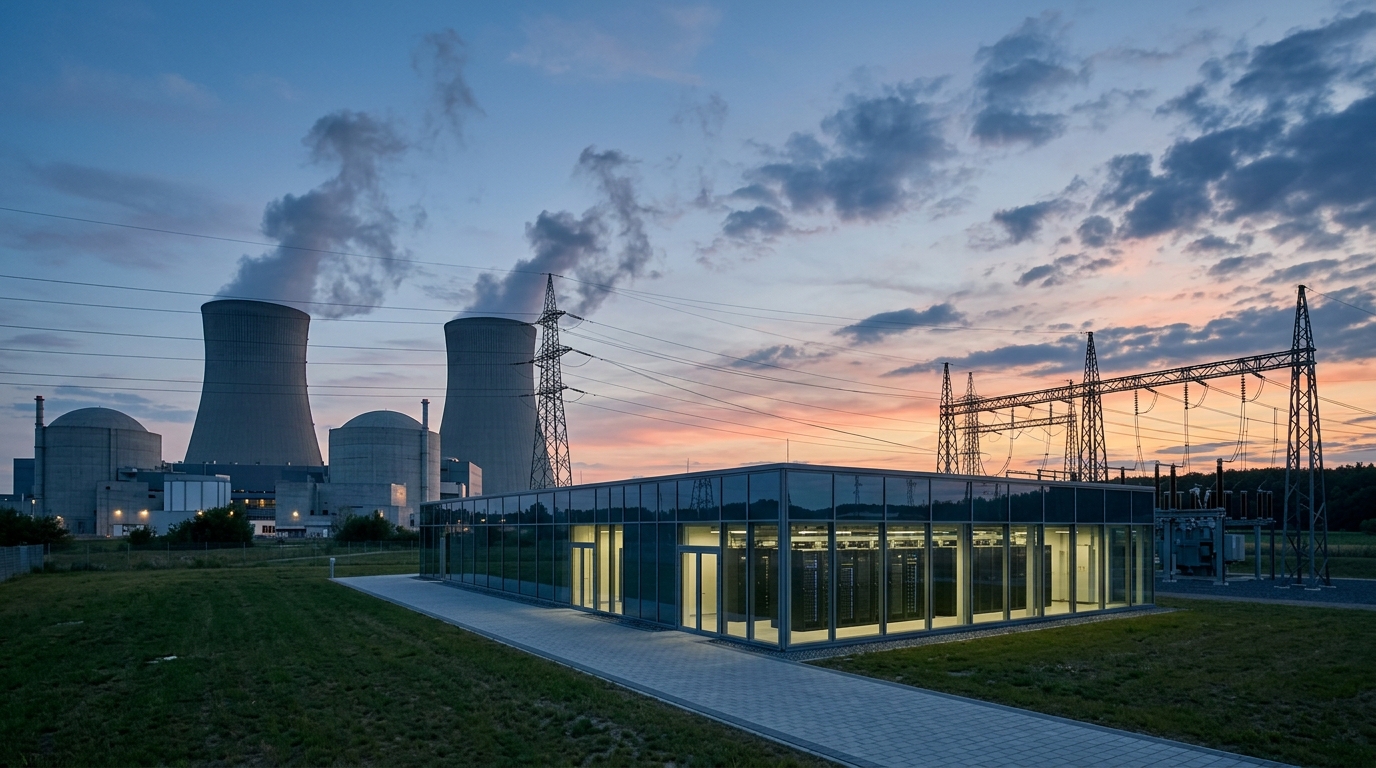
Data centers chew through power at a rate that was almost unthinkable five years ago. The Federal Energy Regulatory Commission has flagged that U.S. data center electricity demand is expected to climb from 19 gigawatts in 2023 to 35 gigawatts by 2030. Wind and solar can’t fill that gap alone — they’re intermittent. Nuclear can. It runs 24/7, carbon-free, and at scale.
That’s the structural case. And it’s not hypothetical anymore.
The Scoreboard
- CEG (Constellation Energy) — down roughly 20% YTD from its October 2025 all-time high near $412, yet Q1 2026 posted $2.74 adjusted EPS versus $2.53 consensus and $11.1B in revenue versus an $8.6B estimate. Analysts hold a Strong Buy consensus with a $368 average price target — implying 40%+ upside from recent levels.
- CCJ (Cameco) — trading near $101, up over 2% in the most recent session. The world’s largest publicly traded uranium producer, with Tier One assets in Saskatchewan’s Athabasca Basin.
- NXE (NexGen Energy) — a pre-revenue developer sitting on the Rook I project, widely considered the highest-grade undeveloped uranium deposit globally. The Canadian Nuclear Safety Commission officially issued the site preparation and construction license on March 5, 2026. Estimated production cost: under $10 per pound — against a spot price holding near $86.
- SMR (NuScale Power) — shares jumped 7% in May 2026 after announcing upbeat Small Modular Reactor deployment progress. The only SMR developer with an NRC-certified design.
- OKLO — backed by Sam Altman, focused on fast fission technology, targeting data center direct power.
The Part People Skip
Constellation’s stock drop is interesting. The fundamentals didn’t break — they actually improved. Q1 revenue came in at $11.1B, massively above the $8.6B estimate, boosted by the $26.6B Calpine acquisition that closed in January 2026. That deal created the largest clean energy fleet in the U.S., a combined 55-gigawatt operation. The EPS guidance for 2026 was reaffirmed at $11.00–$12.00.
So why is the stock down? Regulatory questions around the Crane Clean Energy Center restart, some integration noise around Calpine, and a broader utility sector reset. The company authorized a $5 billion buyback and guided $8.4B in free cash flow over 2026–2027. That is not a broken business.
Slight tangent — but it matters: uranium supply is structurally constrained in a way that most investors still underweight. Kazatomprom, the world’s largest supplier, has already lowered its 2026 production guidance and is operating below full capacity. Bringing new projects online takes 10–15 years. Demand is arriving now. Supply can’t sprint to meet it.
The Valuation Frame
For CEG specifically: the most followed analyst narrative pegs fair value at $370.58, well above recent closes near $267. The 3-year total shareholder return still sits at over 231%. This is a pullback in a secular growth story, not a collapse of the thesis.
For uranium miners — the math at NexGen is striking. Wall Street is paying roughly $1,416 per pound of future uranium capacity at Cameco’s valuation. At NexGen, the same pound costs closer to $179. Same basin, same rock, often lower projected costs.
What Could Go Wrong
Regulatory timelines are long and unforgiving. SMR commercialization is still early-stage — NuScale’s path to revenue is real but not guaranteed. Uranium prices holding near $86 per pound is constructive, but the commodity has seen brutal bear markets before. CEG’s Calpine integration still carries execution risk. None of these are dealbreakers, but they’re not footnotes either.
The nuclear trade is not a momentum play. It’s a structural thesis that requires patience and position sizing discipline.
Worth a closer look before the next data center power deal makes headlines.