Hey there, bargain hunter.
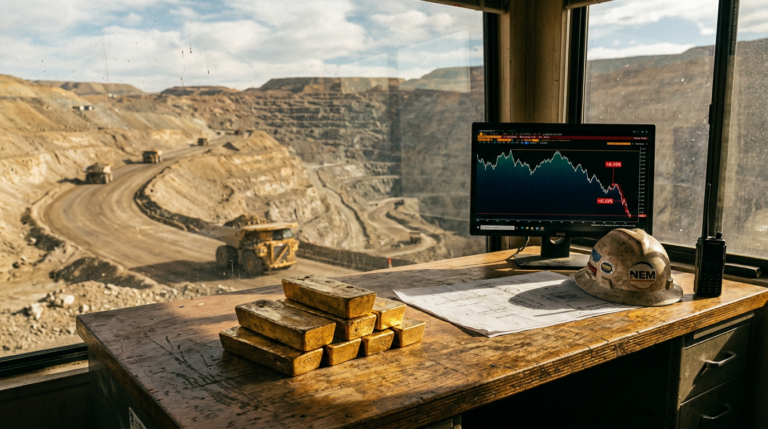
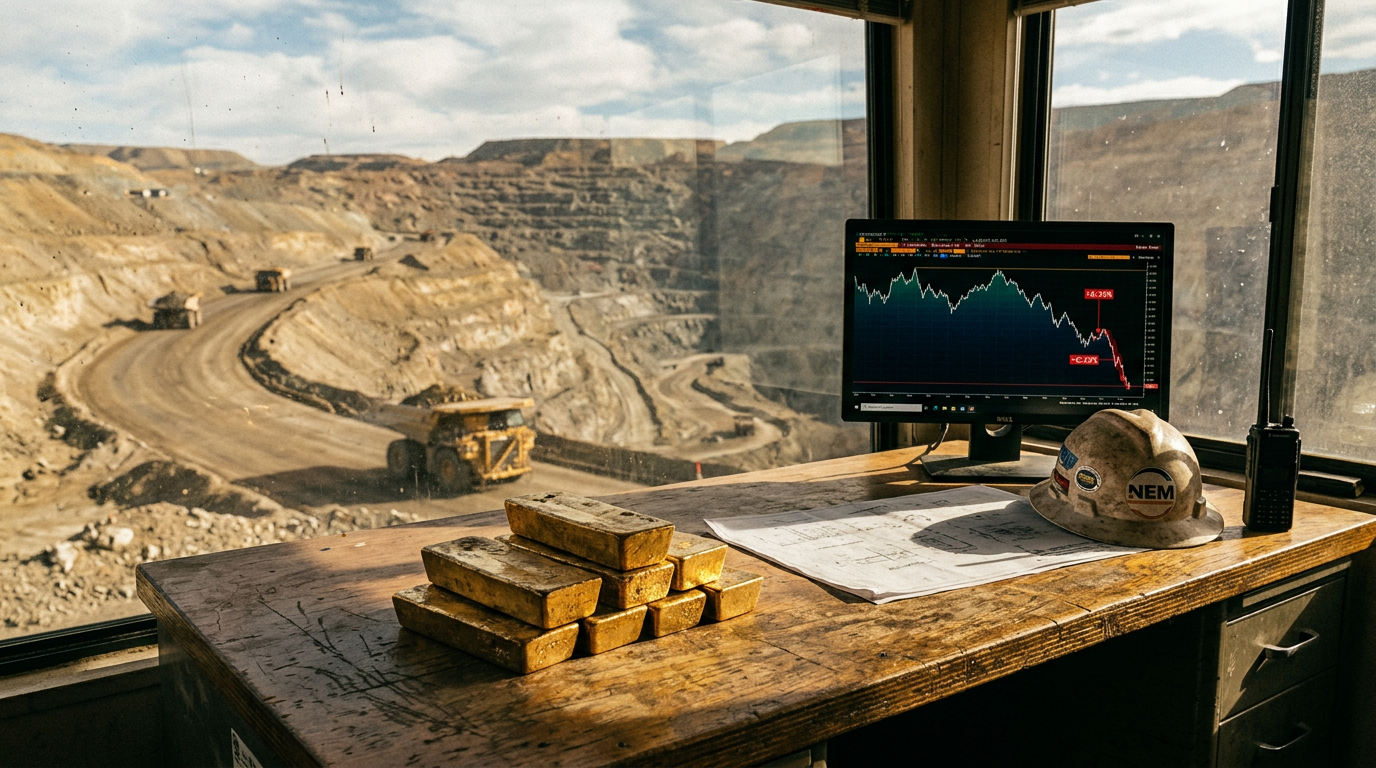
Gold hit around $5,300 an ounce in January. That was the peak. Since then it has spent most of the year being sold off alongside oil fears, Iran war headlines, and Fed rate-hike panic. As of June 25, spot gold is trading near $4,000 — down roughly 20% from that January peak. Newmont (NEM) has lost about 25% since late February alone.
That sounds bad. Here’s what’s interesting about it.
In Q1 2026, Newmont generated an all-time quarterly record of $3.1 billion in free cash flow. Revenue came in at $7.31 billion, beating consensus of $6.44 billion. Adjusted EBITDA hit $5.2 billion. The company produced 1.3 million attributable gold ounces with gold all-in sustaining costs of $1,029 per ounce on a byproduct basis. Then it authorized another $6 billion in share repurchases on top of the $6 billion it had already executed. The stock dropped anyway.
That’s the part people skip.
When gold was running toward $5,000, the miners were priced like it would never stop. Valuations got stretched. Then the same macro forces that fueled the gold run — Middle East tensions, inflation fears — shifted. The Iran conflict pushed oil higher, which reignited Fed hawkishness, which crushed non-yielding assets like gold. Markets are now pricing in a meaningful chance of a Fed rate hike in September. The dollar has surged to its highest level in more than a year. Gold fell through $4,000. And the miners, already repriced from January highs, got hit again.
Here’s where I’m at: the dislocation between the business performance and the stock price is real.
VanEck’s precious metals team has pointed out that industry-wide total costs remain below $2,000 per ounce. Gold is still near $4,000. That is a wide margin by any historical standard. Agnico Eagle (AEM) reported record quarterly operating margins and adjusted net income of about $1,695 million. Fitch upgraded AEM’s long-term issuer default rating to A- in April. The stock is still down from its highs.
Slight tangent, but it matters: some bank research has recently argued for a path toward $6,000 gold by Q4 2026 and $6,300 by end of 2027. Barrick recently reported Q1 2026 attributable free cash flow of $1.21 billion, up sharply versus the prior year. Franco-Nevada (RGLD, FNV) reported a record $650.7 million in revenue in its last filing, up 77% year over year, as higher gold prices flowed through its royalty/streaming model.
The argument for miners here isn’t that gold bounces tomorrow. It’s that the business has already proved it works at these prices. The stocks are being punished for macro fear, not operational failure.
What to Watch
- NEM: Production trough year acknowledged by management. 2026 guide is ~5.3 million oz at AISC of ~$1,680/oz. A new $6B buyback authorization is in place. Stock trades near $105.
- AEM: Fitch-upgraded to A-, 42 consecutive years of dividends. Forward P/E of ~18x — premium to peers but arguably earned.
- GDX (VanEck Gold Miners ETF): Roughly $23.6 billion in AUM, about 60 holdings, top-five names represent ~41% of assets. Cleaner way to own the sector without single-stock risk.
- FNV (Franco-Nevada): No operational exposure. Royalty model means every ounce mined somewhere in the world benefits FNV without the cost side. Record revenue last quarter.
The Risk That’s Real
Fed rate hikes. If the Fed actually delivers multiple hikes before year-end, the dollar strengthens further, opportunity cost of holding gold rises, and the metal could test $3,800 or lower. That would compress margins and extend the de-rating in miners. Cost inflation is also real — Newmont flagged AISC guidance of ~$1,680 for 2026, up meaningfully from recent quarters.
The other risk is peace. If U.S.-Iran negotiations actually resolve and the Strait of Hormuz reopens fully, the geopolitical fear premium in gold deflates fast.
Still. The spread between $4,000 gold and $1,680 AISC is not nothing. Miners are generating cash at a rate that would have looked impossible three years ago. The market is pricing them like the cycle is ending. The cycle might just be pausing.
Worth a closer look before the Fed clarity arrives in September.