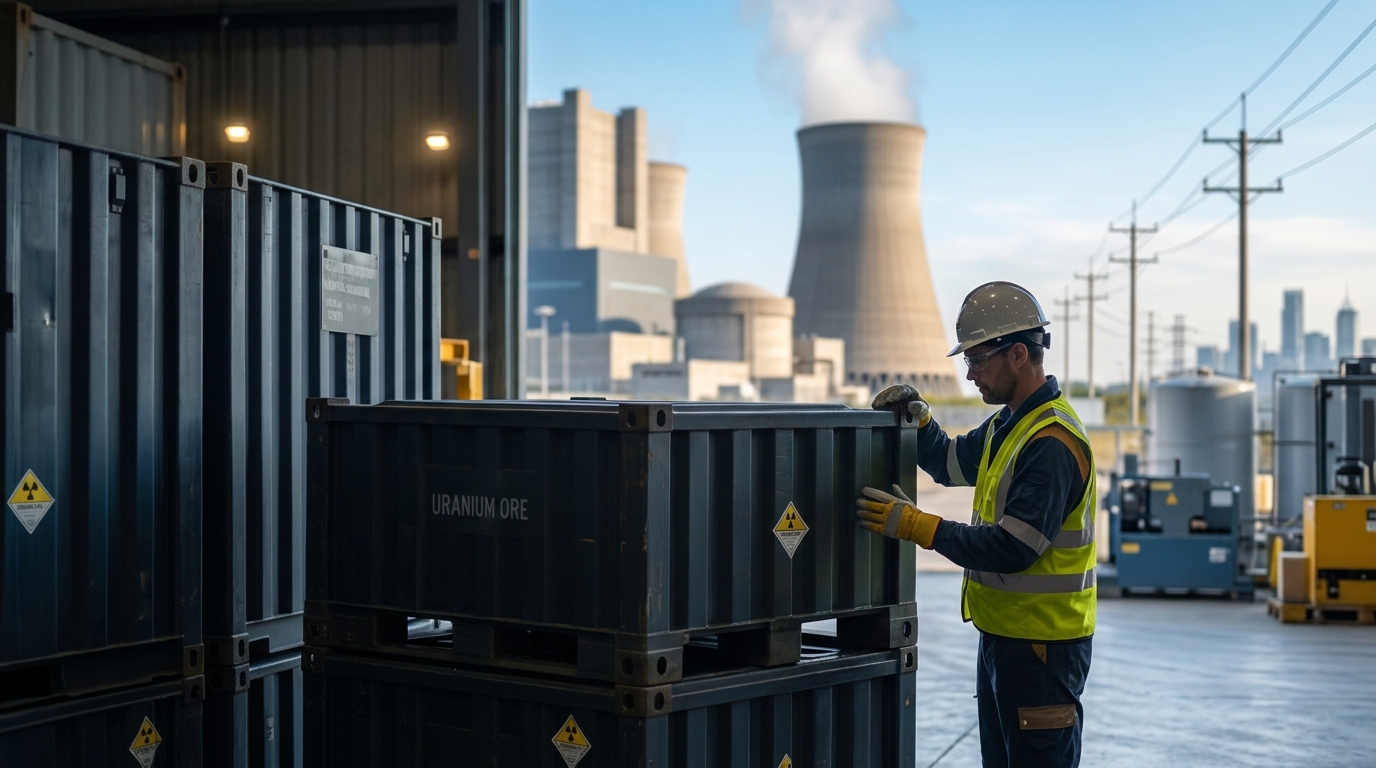
There’s a strange irony playing out in energy markets right now. Everyone’s talking about AI infrastructure, data center buildouts, the electricity crisis — but very few investors have connected that conversation to its most logical upstream beneficiary: uranium.
That’s changing fast.
Nuclear energy has quietly become the defining energy story of 2026. Not oil. Not solar. Not wind. Nuclear — and the fuel that powers it.
Why Now
The setup isn’t complicated once you see it. AI data centers require enormous, around-the-clock electricity loads. Unlike solar or wind, which are weather-dependent and intermittent, nuclear energy delivers consistent, carbon-free baseload power 24/7. More than 30 countries have now endorsed plans to significantly expand nuclear capacity by 2050, and major technology companies are actively exploring nuclear power to meet the insatiable energy demands of AI-driven infrastructure.
Spot uranium prices moved above $100 per pound earlier in 2026 before pulling back — still well above pre-2021 levels, and up more than 18% year over year. The long-term structural demand picture hasn’t changed. If anything, it’s getting stronger.
Enter Cameco
If there’s one name to anchor this theme, it’s Cameco (NYSE: CCJ) — one of the world’s largest uranium fuel producers, operating out of some of the richest uranium deposits on the planet.
The Q1 2026 results were straightforward execution. Revenue from the uranium segment reached $510.5 million. Uranium sales volumes increased 13% from a year earlier. Adjusted net earnings rose to $145.6 million, while net income climbed 87% to $93.8 million. Annual guidance remains unchanged — the company plans to deliver between 29 and 32 million pounds of uranium in 2026 at average realized prices of $85 to $89 per pound.
What makes Cameco different from a speculative uranium miner isn’t just scale. It’s the contract book. The company has approximately 230 million pounds of uranium committed under long-term agreements — providing revenue visibility that most energy companies can only dream about.
Slight tangent, but it matters: In March 2026, Cameco signed a long-term uranium supply agreement with India’s Department of Atomic Energy — nearly 22 million pounds over nine years, with a total contract value estimated at approximately $2.6 billion. India currently has 24 operating reactors and ambitious plans to reach 100 GW of nuclear capacity by 2047. That’s a country adding demand, not subtracting it.
And in June 2026, Cameco increased its ownership stake in the Cigar Lake Mine — widely regarded as one of the world’s highest-grade uranium operations — after acquiring TEPCO’s participating interest. That’s not a company scrambling. That’s a company leaning in.
The Business Has Evolved
The Cameco of 2026 isn’t just a miner. A 50% stake in Westinghouse — a cornerstone of global nuclear services — diversifies the business model and stabilizes cash flow against uranium price volatility. The combination of fuel supply plus reactor services is a rare vertical position in a sector that typically fragments those roles.
The stock has reflected this. Shares have risen more than 18% year-to-date, and the multi-year return is considerably stronger for those who sized up early.
The Risk Worth Naming
Cameco is not cheap. The price-to-sales ratio currently sits around 22x versus a five-year average of 9x. The valuation prices in a lot of the positive thesis. Any demand shock, regulatory reversal, or supply surge could compress the multiple quickly. This is a long-duration thesis — and the market is already pricing in much of the good news.
That’s actually the tension worth sitting with. The nuclear thesis is real. Whether the current price fully reflects it — or has room to run further — depends on which part of the demand curve you think we’re in.
My read: the world is earlier in this cycle than most people realize. The reactor pipeline being built globally takes years to come online. The fuel contracts being signed today are locking in 2028, 2030, 2032 supply windows. Cameco’s contract portfolio is filling those slots now — before the demand peak hits.
Worth a closer look if nuclear’s second act is something you’re not yet positioned for.