Oil fell. Everyone celebrated. That’s probably the wrong reaction.
Oil prices have continued to drop as hopes rise for a return to stability in global energy markets, with Brent crude recently trading at $78.24 a barrel — the lowest price since just before the conflict began. After rising more than 50 percent during the conflict, crude was only about 7 percent higher than its pre-war level. On the surface, that looks like a clean resolution. It isn’t.
Here’s what the market is pricing as if it’s already over: the physical reopening. Here’s what it’s not pricing: the commercial reopening. Those are two different events, separated by a timeline that no diplomatic agreement can compress.
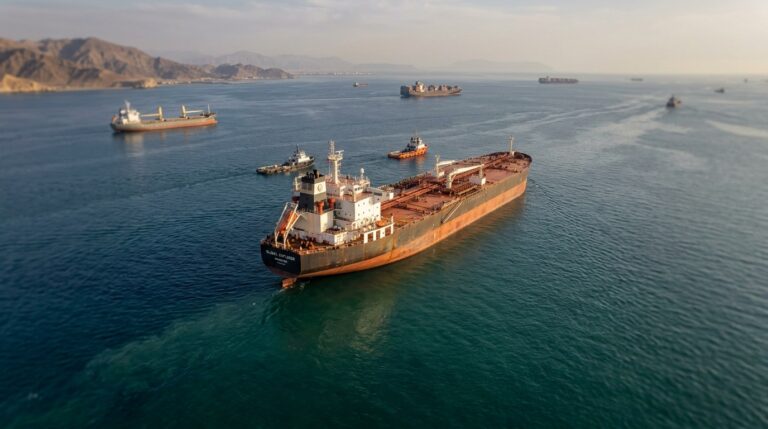
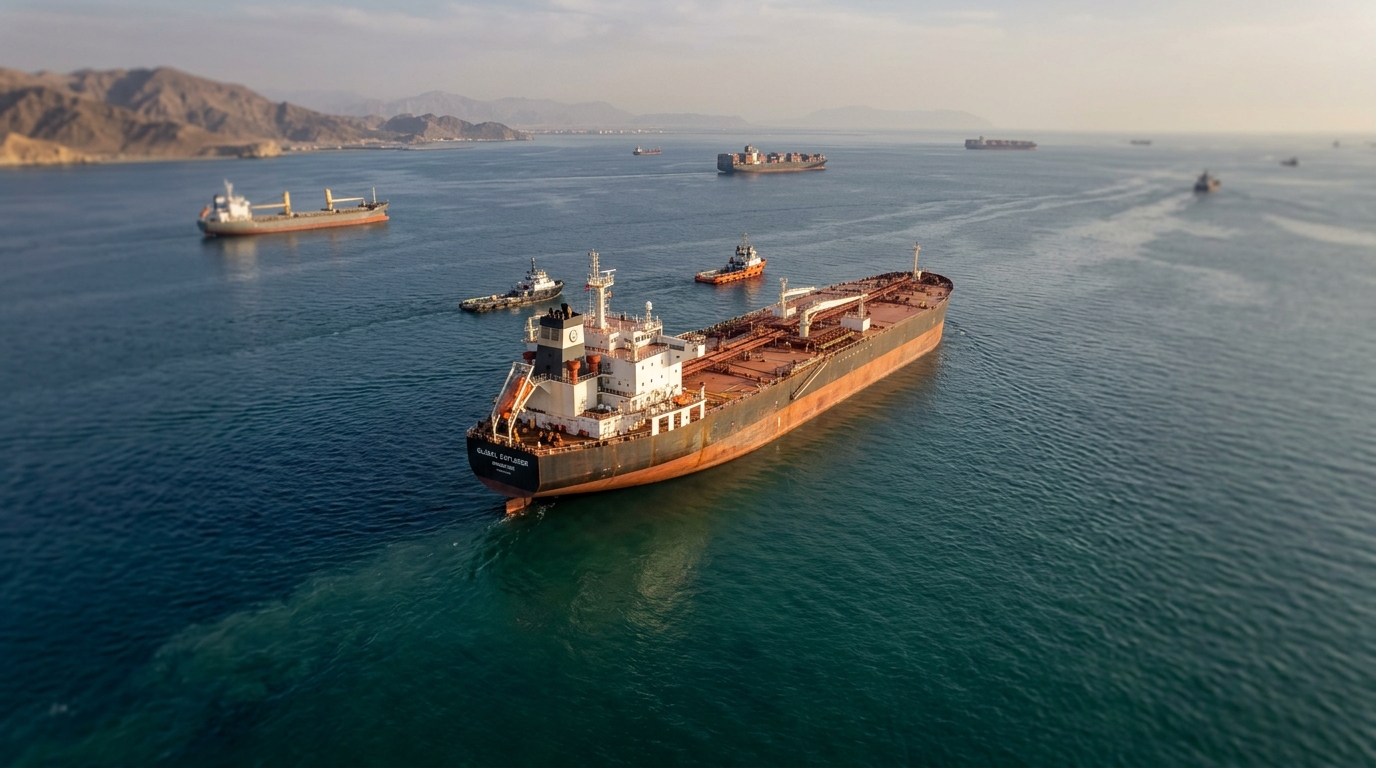
Shipping traffic through the Strait of Hormuz has been largely blocked since February 28, 2026, when the U.S. and Israel launched an air war against Iran, prompting the IRGC to issue warnings forbidding passage, board and attack merchant ships, and lay sea mines in the strait. The crisis has been described as the largest disruption to the energy supply since the 1970s oil crises.
Kpler estimated 118 tankers were stranded in the Persian Gulf as recently as mid-June. Analysts estimate the backlog could take 10 to 15 days to clear, but warned that would not amount to a full recovery — the initial boost would be “purely mechanical,” delivering “an early spike in transits without lifting underlying throughput.”
Slight tangent, but it matters here: the fertilizer angle is almost completely absent from the financial press. The Persian Gulf is a major hub for global fertilizer production and exports. The region accounts for roughly 30–35% of global urea exports and around 20–30% of ammonia exports. Up to 30% of internationally traded fertilizers normally transit the Strait of Hormuz. That’s an agricultural input shock that hasn’t shown up in food prices yet. When it does, it will.
What the market is actually mispricing
War risk surcharges for Hormuz-transiting vessels remain significantly elevated above pre-conflict baseline levels. Some shipowners are understood to be seeking government-backed insurance guarantees before committing vessels to Gulf routes. That is not a headline risk. That is a structural bottleneck that persists regardless of what any MoU says.
Operators, port authorities and energy companies across the Gulf remain in a holding pattern, with key logistical and security questions still unresolved. The most likely scenario, according to Adam Sharpe of Lloyd’s List Intelligence, is a phased restart — with unresolved questions around whether vessels need prior permission, whether Iran will impose service charges, and whether mines require a clearance process.
Analysts have modeled Brent crude potentially reaching $100–$170 per barrel in a scenario where the strait reverts to restricted status. The current partial reopening under military quota management means full price normalization remains contingent on durable diplomatic progress.
So the base case from Goldman — a Brent forecast of $80 per barrel for Q4 2026 and $75 for the 2027 average — assumes everything goes smoothly. Smooth is not what the Hormuz corridor has delivered in 2026.
Where the real opportunity sits
Asia absorbs approximately 89.2% of all crude oil transiting the Strait. Any meaningful disruption is first and foremost an Asian energy security event — with consequences that radiate outward from Beijing, New Delhi, Seoul, and Tokyo before they reach Western capitals. This geographic concentration creates a structural asymmetry in risk exposure that markets frequently underestimate.
The tanker market is the trade nobody is running. Ships that went dark during the conflict — turning off GPS systems to avoid detection — are likely to continue that behavior until Washington and Tehran reach a clear understanding on freedom of navigation. The transition from dark to declared shipping is a months-long process with real rate implications for tanker operators.
The 2026 Hormuz closure has demonstrated that Persian Gulf supply concentration remains a live systemic vulnerability rather than a theoretical risk. Expect sustained policy and capital allocation focus on supply chain resilience, strategic reserve adequacy, and route diversification to be durable themes in energy markets for years beyond the immediate reopening.
The market priced the war. It hasn’t priced the recovery’s complexity. That’s the part worth watching.